CUSTOMER PERSONA SERIES · PART 3
Buyer Persona Example + Template You Can Copy Today.
In Part 1, we introduced Vivek as a quick example of what a persona looks like. In Part 2, we covered where the data behind a persona actually comes from.
Now let’s put it all together — a complete buyer persona example, broken down field by field, plus a blank template you can fill in for your own business right now.
A Complete Buyer Persona Example, Field by Field.
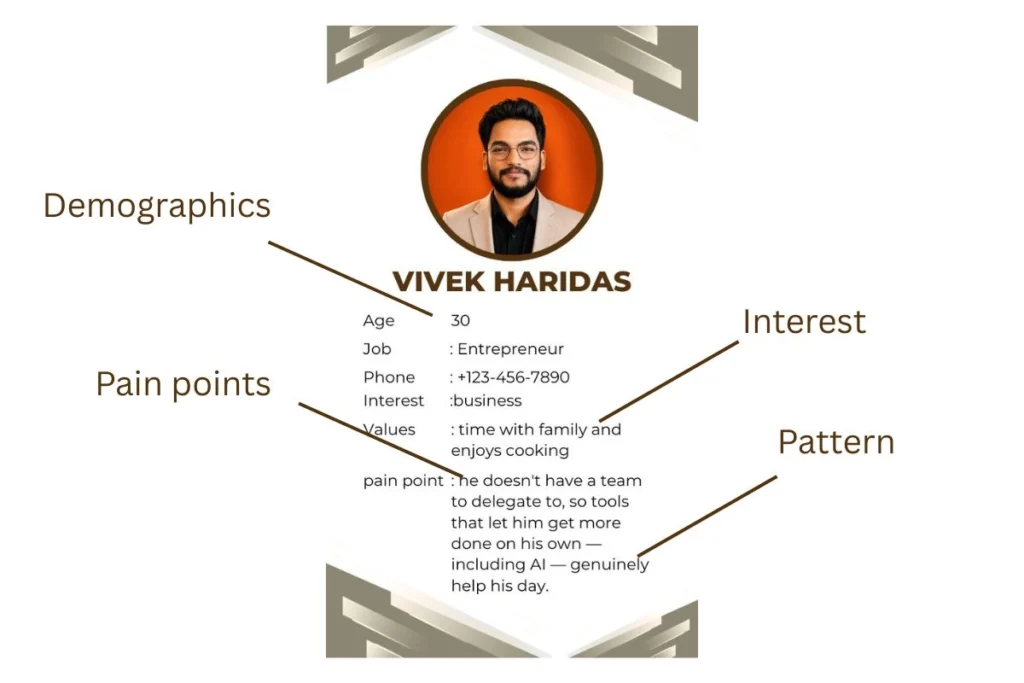
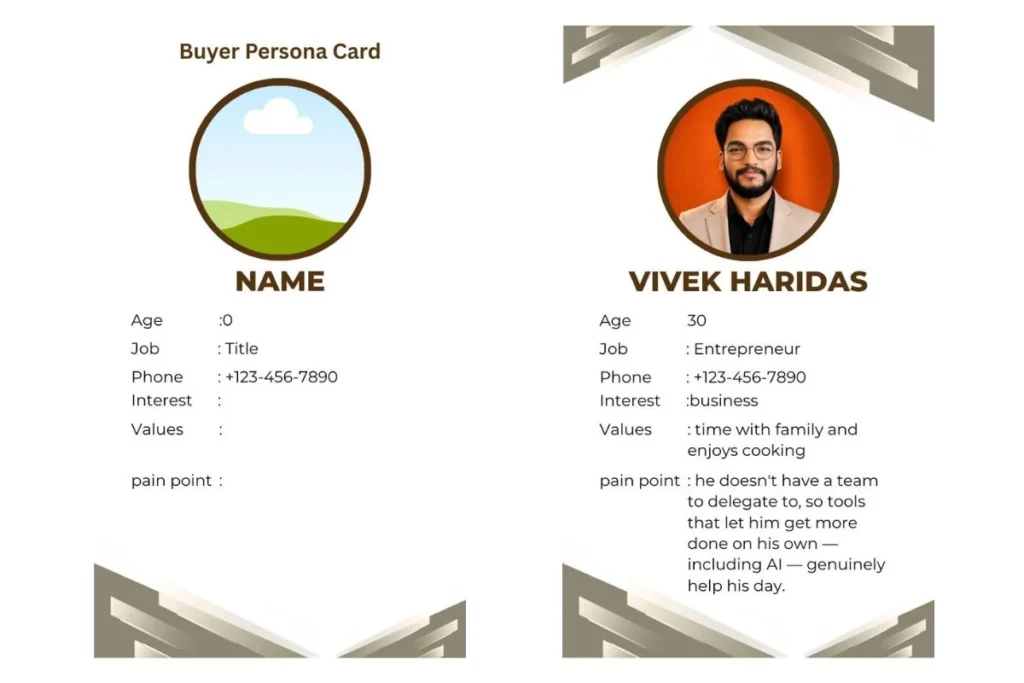
Here’s Vivek’s persona built out completely — a real example you can use as a reference while building your own:
Name: Vivek Age: 30 Role: Entrepreneur, running a small business on his own Demographics: Male, 30, based in a mid-sized city, runs a lean operation without a large team.
Psychographics (interests & values): Genuinely interested in business tools and tips that make office work easier. Values time with family and enjoys cooking in his free time — work-life balance matters to him, not just growth at any cost Behavior patterns: Actively searches for tools and shortcuts that save time; researches before buying rather than purchasing on impulse; engages with practical, no-fluff content over heavily produced marketing Goals: Grow the business without burning out; find tools that let him do more without hiring Pain points: No team to delegate to, so every extra task falls on him directly; limited time to evaluate every tool on the market, so he needs quick, honest recommendations
Why This Level of Detail Matters
Notice what this buyer persona example actually enables. “Male, 30, business owner” tells you almost nothing useful.
But “no team to delegate to, needs quick honest recommendations, values work-life balance” — that tells you exactly how to write an email subject line, what kind of ad copy would land, and even what tone your customer service should use with him. That’s the entire point of building a persona this specific.
Your Turn: A Fill-In Template
Now that you’ve seen a full example, copy this structure and fill it in based on the research from Part 2:
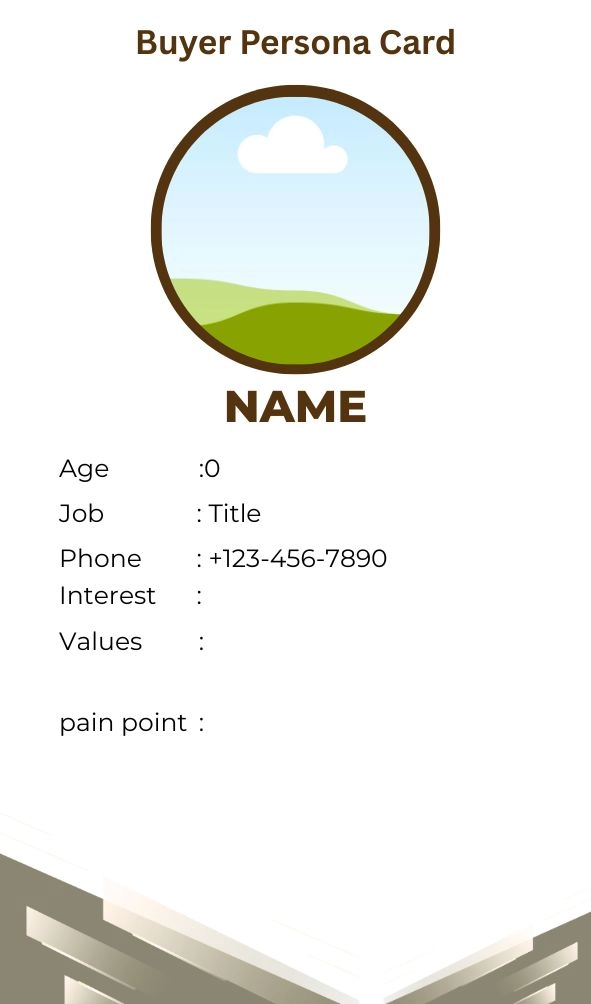
Name: _______________
Age: _______________
Role/Occupation: _______________
Demographics:
(Location, income level, family status, etc.)
Psychographics — Interests & Values:
(What do they care about? What’s their lifestyle like?)
Behavior Patterns:
(How do they research, decide, and buy?)
Goals:
(What are they trying to achieve?)
Pain Points:
(What’s standing in their way right now?)
Preferred Channels:
(Where do they actually spend time — Instagram, LinkedIn, email, etc.?)
A few tips for filling this in:
- Don’t guess fields you don’t have data for yet. It’s fine to leave a field rough or mark it “needs more research” — a persona improves over time, it doesn’t need to be perfect on day one.
- One persona per core customer type. If your business genuinely serves two very different kinds of customers, build a second persona rather than blending both into one confused profile.
- Revisit it every few months. Customer behavior shifts, and a persona built a year ago may no longer reflect who’s actually buying from you today.
If you’d rather not build this by hand, HubSpot’s free Make My Persona tool will turn a plain-language description of your customer into a structured, shareable persona document in minutes — a useful shortcut once you already have the research from Part 2.
Bringing the Whole Series Together
Across this series, you’ve gone from understanding what a persona is (Part 1), to knowing exactly where the data comes from (Part 2), to now having a complete example and a template to build your own (Part 3).
And if you haven’t yet mapped out your broader targeted audience — the segment your persona is built from — that’s worth doing first, so your persona is grounded in real research rather than a best guess.