CUSTOMER PERSONA SERIES · PART 1
What Is a Customer Persona? A Simple Guide to Building One That Actually Works
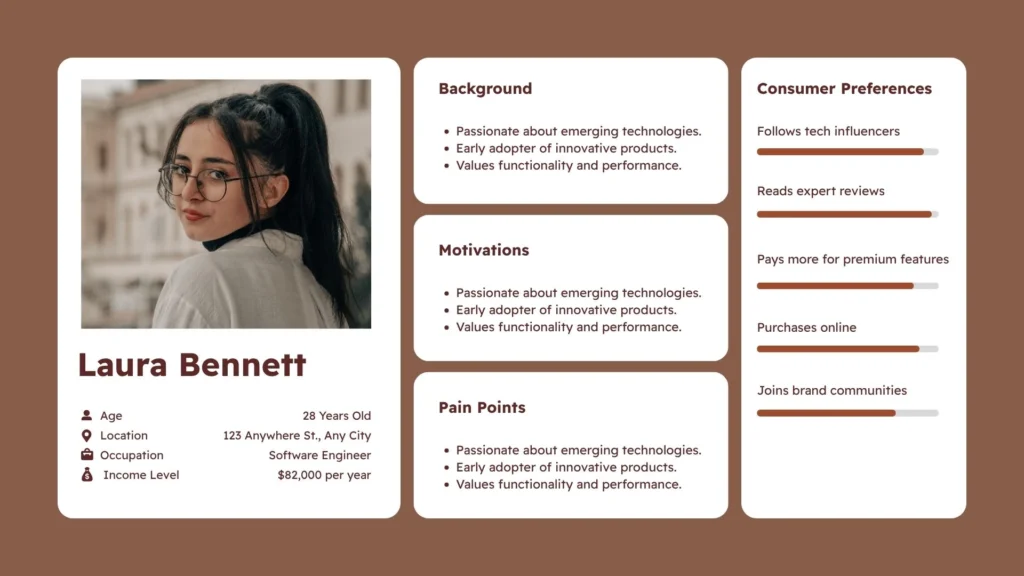
Most businesses think they know their customer. Ask them who they’re selling to, and you’ll usually get something like “women, 25 to 40” or “small business owners.” That’s not wrong — it’s just not enough. It’s a segment, not a person. And you can’t write content, design a product, or build a marketing message for a segment. You can only do that for a person.
That’s exactly what a customer persona solves.
What Is a Customer Persona (and Is It the Same as a Buyer or User Persona)?
A customer persona — also called a buyer persona in marketing and a user persona in product or app design — is a semi-fictional profile of your ideal customer, built from real data. It usually has a name, an age, a job, a few goals, and a few pain points.
The terms are used slightly differently depending on who you ask:
- Marketers usually say buyer persona — focused on what makes someone decide to purchase.
- Product and UX teams usually say user persona — focused on how someone actually uses a product or app.
- Customer persona is the general term that covers both.
For most small businesses, all three questions matter — why they buy, and how they use what you sell — so you don’t need to overthink which term applies to you. Build one solid persona, and it answers all three.
Why Build a Customer Persona in the First Place?
A persona isn’t just a nice-to-have document. It changes how you work:
- Your content connects instead of guessing. When you know exactly who you’re writing for — their pain points, their day-to-day — your content speaks to them directly instead of sounding generic. That raises engagement, conversion rate, and ROI.
- It builds trust, not just sales. When a customer feels like you actually understand their problem, that’s the moment they stop seeing you as “just another brand” and start coming back.
- It aligns your whole team. One clear persona means your product team, your marketing team, and your sales team are all building for the same person — not three different guesses.
How to Build a Customer Persona (Step by Step)
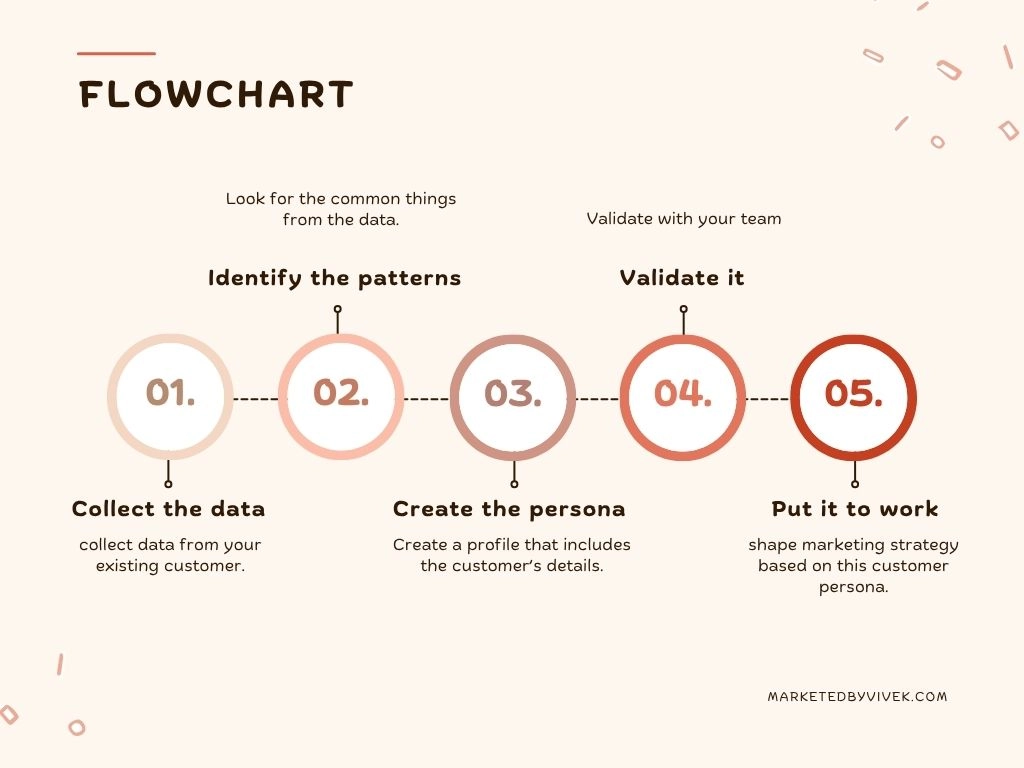
Creating a persona isn’t just listing demographics. It’s about understanding what makes your ideal customer stop scrolling, pay attention, and take action. Here’s how to build one:
1. Collect the data
Start with your existing customers — their demographics, purchase behavior, and social media interactions. If you’re a new business without a customer base yet, study your competitors’ audience instead: check who’s engaging with their content and commenting on their posts.
2. Identify the patterns
Look for what repeats across your data. Common demographics, common interests, common pain points. These patterns are what turn raw data into a real persona.
3. Create the persona
Now build the actual profile. Each persona should include demographics, interests and values (psychographics), behavior patterns, goals, and pain points.
4. Validate it
Don’t just trust your first draft. Share the persona with your team, and if possible, check it against real customer feedback to see if it holds up.
5. Put it to work
This is the step most businesses skip. A persona only matters if you actually use it — to write content, build messaging, and shape marketing strategy that speaks directly to that person’s needs. Share it with your product and promotion teams too, so everyone is building for the same customer.
A Real Example
Here’s what a finished persona looks like:
Vivek, 30, Entrepreneur. Interested in business tools and tips that make office work easier. Values time with family and enjoys cooking. His biggest pain point: he doesn’t have a team to delegate to, so tools that let him get more done on his own — including AI — genuinely help his day.
Notice this isn’t just “male, 30, business owner.” It’s specific enough that you could write a piece of content, an ad, or a product feature directly for Vivek — and know it would land.

Where This Fits With Your Targeted Audience
A persona works best after you’ve done some groundwork on your targeted audience — the broader segment you’re building for. Think of the audience as the raw material, and the persona as the finished character built from it. If you haven’t mapped out your audience segments yet, that’s the natural first step before building your persona.