The 4 Types of Targeted Audience (and How to Spot Yours).
Not all targeted audiences are found the same way. Here are the 4 core types — with real examples — so you know exactly where to look.
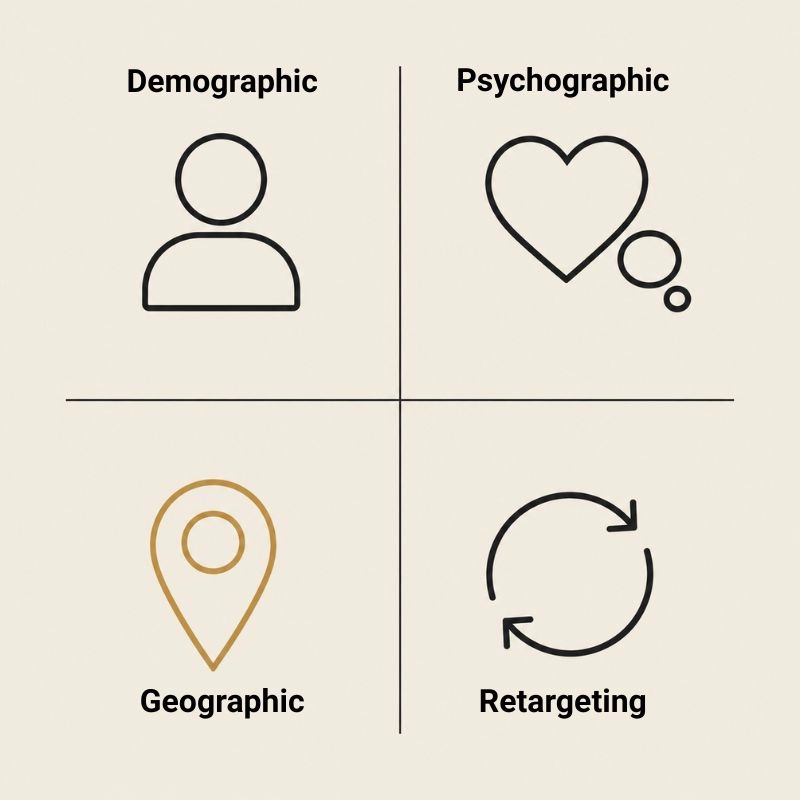
In Part 1, we talked about why finding your targeted audience has to come before branding. But “find your audience” is a big, vague instruction on its own. The truth is, there isn’t just one way to define an audience — there are four types of targeted audience you can work from, and each one tells you something different about your customer.
Understanding these types of targeted audience isn’t just theory. Once you know which one actually fits your product, you know exactly where to point your research — instead of guessing.
Let’s break down each of the four types of targeted audience, one by one, starting with the most familiar.
1. Demographic Targeting
This is the most familiar type — targeting based on measurable traits like age, gender, income, occupation, or family status.
Example: A maternity wear brand naturally targets women in a specific age and life-stage range — it’s built into the product itself.
Demographic targeting is usually your starting point because it’s the easiest to define and the easiest to find data on (from tools like Google Analytics or your own sales records). But on its own, it only tells you who someone is — not why they buy.
2. Psychographic Targeting
This is about understanding your customer’s interests, values, and lifestyle choices — the “why” behind their decisions.
Example: A ready-to-cook food brand isn’t just targeting “working professionals” as a demographic — it’s targeting people with a specific lifestyle: busy schedules, limited time to cook, and a preference for convenience without giving up quality. That’s psychographic, not demographic.
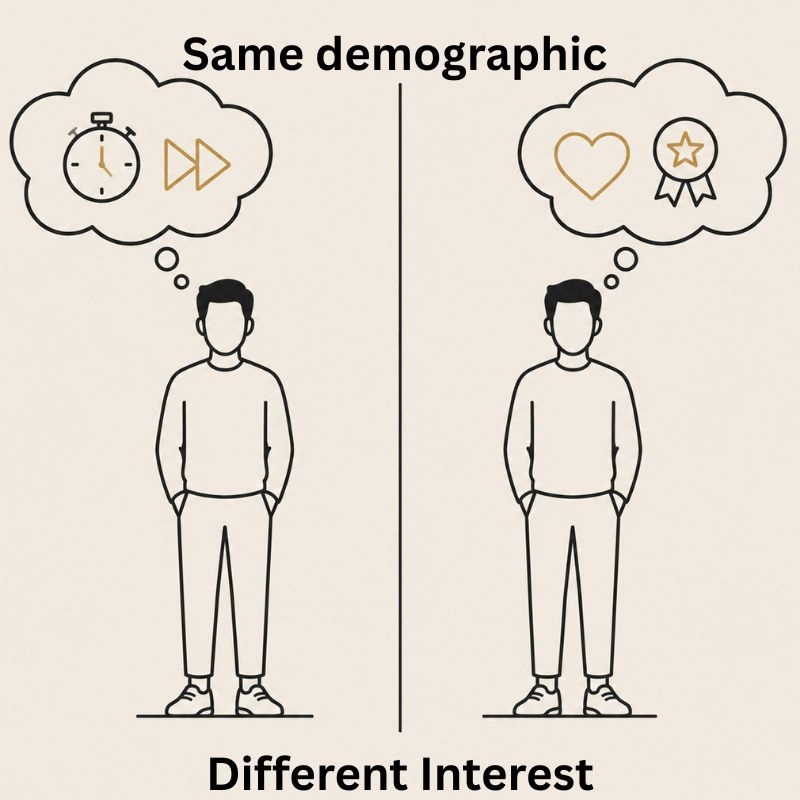
This is where your messaging gets sharp. Two people can share the exact same age and income and still buy for completely different reasons — psychographics is how you find that reason.
3. Geographic Targeting
Where your customer physically lives — country, state, city, or even a postal code — can matter just as much as who they are.
Example: A water filter brand solving hard-water problems didn’t launch everywhere at once. The marketing team found that Bangalore had a particularly high concentration of the exact issue their product solved, so that’s where they focused first. A strategy that works in one city might completely miss the mark in another — geography changes what problems people actually have.
If your product solves a location-specific problem, this is often the most overlooked but highest-impact of the four types of targeted audience.
4. Retargeting
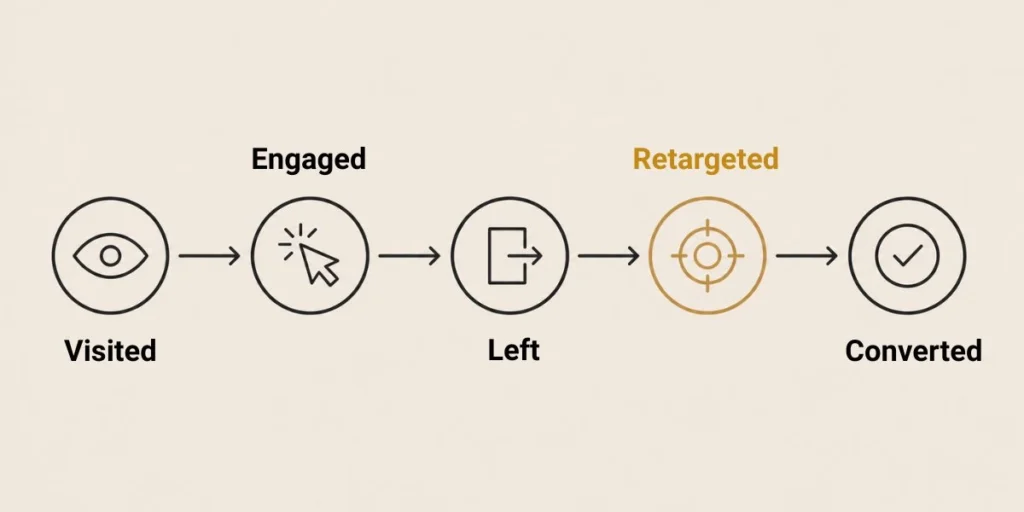
This one’s different from the first three — it’s not about finding a new audience, it’s about following up with people who already showed interest.
Example: Someone visits your website or engages with your social post but doesn’t purchase. They’re not a stranger — they’re already your audience, they just haven’t converted yet. A gentle reminder (an ad, an email, a retargeted post) is often what brings them back, especially if they simply forgot about you rather than decided against you.
Retargeting tends to have some of the highest conversion rates of any strategy, precisely because you’re not starting from zero — you’re re-engaging someone who’s already shown intent.
Which Type Should You Focus On?
Most businesses end up using a mix of all four types of targeted audience — but usually one does the heavy lifting depending on your product. A location-specific product (like the water filter) leans geographic. A lifestyle-driven product (like ready-to-cook meals) leans psychographic. The key is knowing which lens actually explains why your best customers buy — not just applying all four because they exist.
Once you’ve identified which types of targeted audience apply to your business, the next step is turning that understanding into a research process — which is exactly what we’ll cover in Part 3.